Are you revelling in the cosy nights? Have you filled your Pinterest boards with the latest autumnal trends? Are you cwtched up on the sofa with a piping cup of siocled popeth (hot chocolate). Perhaps you’ve already cranked up the gwres (heating)!
Yr Hydref (autumn) is my favourite time of year. From crisp mornings to cosy evenings in with the family, I especially adore the shorter months and all they have to offer.
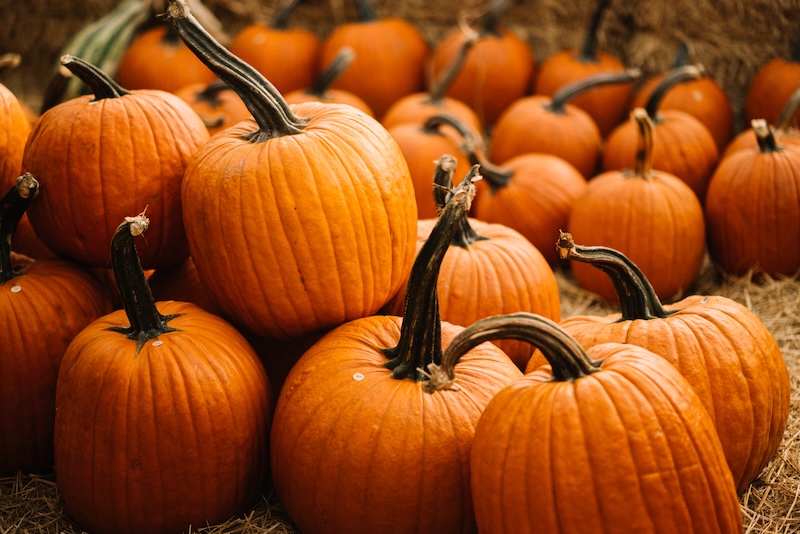
Today’s word of the day is pwmpen (pumpkin), a wonderfully versatile vegetable famous for its bright orange colour. It is not only a beloved autumn staple, but also a familiar favourite amongst Disney princesses, and a central symbol of Calan Gaeaf (Halloween).
pwmpen
pumpkin
Pwmpen (plural: pwmpenni) is a surprisingly modern Welsh word with sources indicating its earliest attestation in 1916. According to GPC, the term as we know it derives from the earlier form pompion with Welsh simply ‘Welshifying’ the term by adding the suffix ‑en, giving the word a more natural Welsh form.
pwmpenni
pumpkins
Pompion comes from the French word pompon meaning ‘melon’ or ‘cucumber,’ making pwmpen a loanword rather than an inherited Celtic term.
Soft mutation
bwmpen
- ei bwmpen – his pumpkin
- dy bwmpen – your pumpkin
Nasal mutation
mhwmpen
- fy mhwmpen – my pumpkin
Aspirate mutation
phwmpen
- ei phwmpen – her pumpkin
As pwmpen is a feminine noun, it mutates after the article y, therefore becoming:
- y bwmpen oren = the orange pumpkin
- y bwmpen fawr = the big pumpkin
Here are some example sentences:
Roedd y plant yn caru casglu pwmpenni ar gyfer Calan Gaeaf.
The children love collecting pumpkins for Halloween.
Coginiais i gawl pwmpen.
I cooked pumpkin soup.
Historically people carved meipiau (turnips) or rwdion (swedes) during Calan Gaeaf. Although turnips are considerably smaller and tougher to torri â llaw (hand-carve), they were considered the traditional Celtic choice. These lanterns were called Jack-o’-lanterns and were used to ward off evil spirits and light the way.
As Celtic communities moved further afield to places such as Gogledd America (North America), they encountered pwmpenni and quickly realised they were perfect for lantern making. Pwmpenni were mwy (larger), meddalach (softer) and haws (easier) to torri (carve) than turnips.
By the 19th century, pumpkin carving was a central part of the dathliadau Calan Gaeaf (Halloween celebrations) in America and soon travelled back across the pond and became an established traddodiad (tradition) here as well.
Below is a list of some more autumnal vocabulary:
- cynhaeaf = harvest
- cawl pwmpen = pumpkin soup
- torri = carve
- hydref = autumn (also October)
- hydrefol = autumnal
- canwyll = candle
So, whether your plan is to wrap up warm and go pumpkin picking with the teulu (family), or carve some scary pwmpenni to spook the kids on Halloween, remember just how these bright, orange vegetables came to be part of our autumn traditions!