One of my favourite things about Welsh is that whether you just started learning it yesterday or you’ve been immersed in the language since the day you were born, there are always new things to discover.
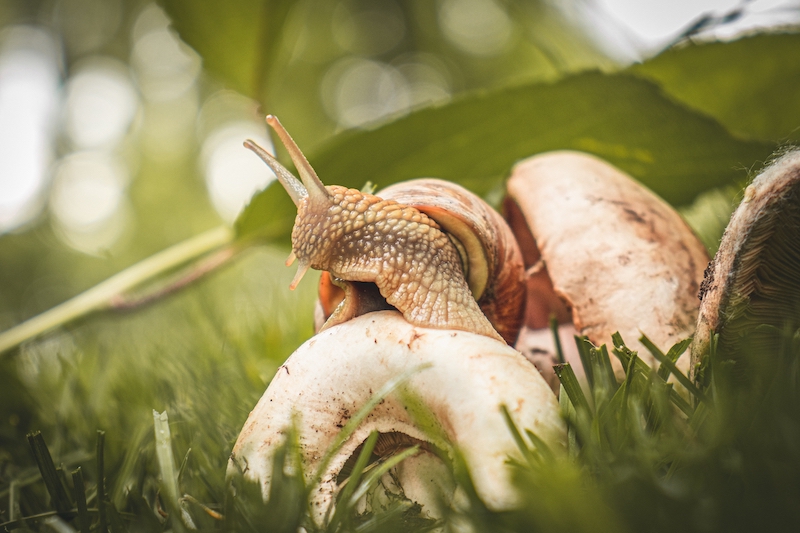
This is of course true of any language, but one thing that makes it particularly evident in Welsh is the strong North-South divide. For example, I grew up using the word malwoden to mean a snail, but I only learnt today that most Northerners actually say malwen instead. What these two words have in common is their plural, malwod (snails), and it’s that that serves as our word of the day today.
malwoden
a snail
malwen
a snail
malwod
snails
Malwod in Welsh is an example of the collective-singulative structure, which basically just means that the default, dictionary form of the word is the plural, not the singular.
This phenomenon is much more common in Welsh than it is in English, and it also has the side effect that some native speakers use the plural form as if it were a singular, even though this is not strictly correct. Another good tip about collective nouns is that the singular forms are often, though not always, feminine, and this rule holds true for malwoden / malwen.
Soft mutation
falwod
Nasal mutation
N/A
Aspirate mutation
N/A
The root form of this word in proto-Brittonic, *melw, meant soft. We can trace it back even further to the likely proto-Indo-European root, which was *mldus (soft or weak).
This is obviously quite a vague meaning, and as such this root word generated a wide variety of descendants in modern Indo-European languages. It may even be the ultimate source of the French mouton (sheep), making sheep and snails far more closely related linguistically than they are biologically!
The use of malwod is just a little bit broader than snails in English. The term, or alternatives such as malwod duon (literally black snails) and malwod gwlith (dew snails), is often used interchangeably with gwlithod (slugs). And historically it was also one way of saying turtles, which in modern Welsh is crwbanod y môr.
What about other pryfed (variously meaning flies, pests or insects, but here used as creepy-crawlies) of the llysnafeddog (slimy) variety?
- mwydod / pryfed genwair = earthworms
- lindys / pryfed dail = caterpillars
- malwod môr = sea snails
- nadroedd = snakes
- llyffantod / llyffantod du = toads
- gelod, in some dialects malwod pendoll = leeches
- madfallod = lizards
- cynrhon = maggots
Of this llithrig (slippery) group, malwod have the dubious distinction of being most people’s least-despised. Personally, I quite like gwlithod; I think they’re actually pretty cute 😊
I suspect much of the reason malwod are popular is their pretty cregyn (shells), known for their swirling patrymau. The cragen (shell) of a malwoden / malwen is a key part of its anatomy – unlike for the cranc meddal (hermit crab), which despite being cragennog (shelled), uses a cragen borrowed from a molwsg (mollusc), rather than one it has grown itself.
Malwod also serve various purposes for bodau dynol (humans). In many parts of the world they are farmed for bwyd, or, more happily for the malwoden / malwen itself, they may be kept as anifeiliaid anwes (pets). And though today most people’s first thought when coming across a llys malwod (snail’s trail) in the gardd (garden) is not “Great! I can use this!”, the chwarenlifau (secretions) of malwod were even used as some of the earliest forms of lliw (dye).
Mae nifer o falwod yn yr ardd ar ôl y glaw a gawson ni ddoe.
There are several snails in the garden after the rain we had yesterday.
The Welsh have even put this humble creadur (creature) to use in idioms.
Of course, there’s the typical expression that you’ll hear in English too, and doubtless many other languages – to cerdded (walk) or symud (move) slowly is to mynd fel malwen (go like a snail). You can even get more specific and say mynd fel malwen mewn côl-tar (to go like a snail in tar); plus there’s the archaic Welsh word malwenna, which is like a verbal form of the world snail.
One less familiar idiom is cysgu yn llety’r falwoden or cysgu yn llety’r falwen, which literally means sleeping in the snail’s lodgings, and refers simply to sleeping outside.
Lastly and most bizarrely, the Welsh equivalent of a chocolate teapot for talking about the uselessness of something is cyllell ‘sbaddu malwod – literally a knife for castrating snails!