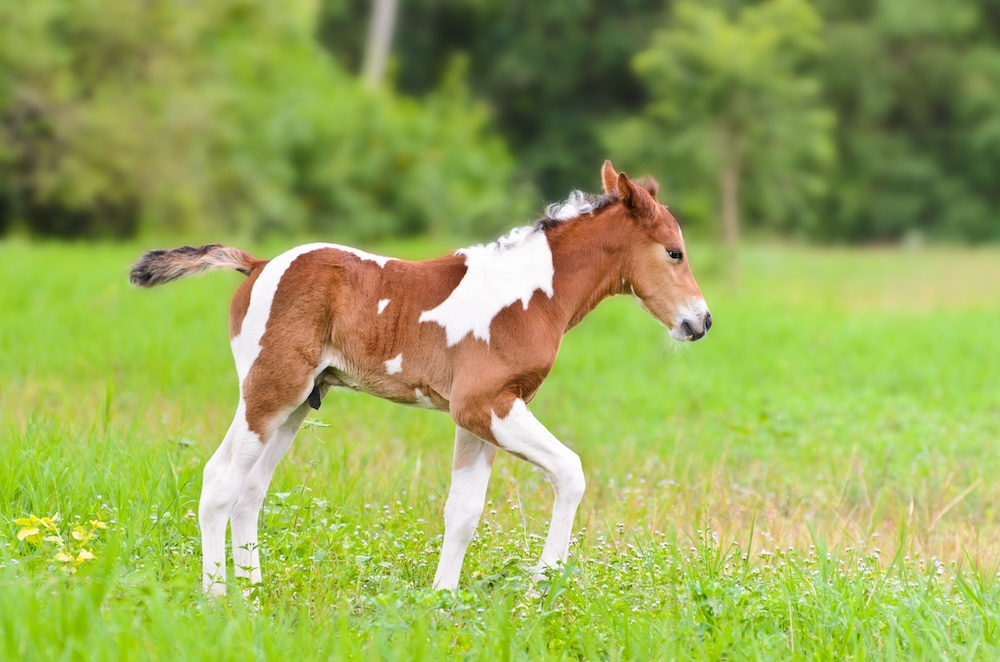
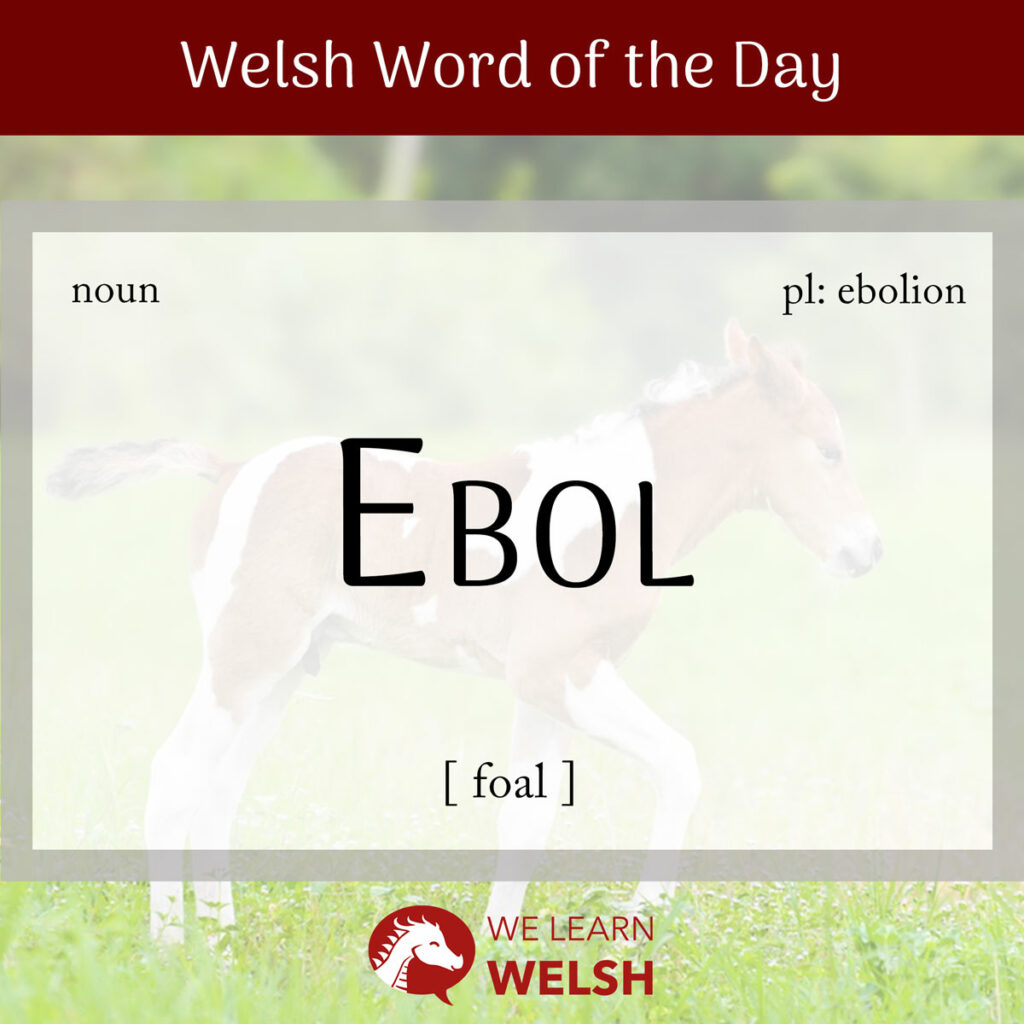
Today’s Welsh word of the day is ebol, which means a foal – a baby ceffyl (horse), or sometimes also a baby of other equine species, like the asyn (donkey) for example.
More than one ebol is ebolion (foals), but there’s technically a separate word, and a separate plural, based on the gender of the anifail (animal). A female foal, sometimes called a filly in English, is an eboles, and the plural is ebolesau. We do have a specific English word for a male foal which is colt, and this in Welsh is just ebol again.
In general, Welsh is a highly gendered language and nouns that refer to pobl (people) and anifeiliaid (animals) often have two completely separate forms.
ebol (S)
foal
ebol (N)
foal
ebolion
foals
Note the slightly different Northern and Southern pronunciations: as usual, Southerners insert longer vowels in the stressed syllable of a word (which in Welsh is always the penultimate syllable).
Etymologically, ebol ultimately comes from a diminutive form of the proto-Brittonic *eb (horse), so it does just mean little horse. Interestingly the word ceffyl in modern Welsh comes from a different old Celtic word for horse, so the two terms aren’t related to each other.
It is possible that *eb might be the root of the name of the beautiful Mynydd Epynt area in South Powys. Mynydd means mountain, and if Epynt does come from *eb, it would be translated as a pathway for horses.
Interestingly there are some other terms that have been recorded used for foal, but many of these are becoming uncommon as Welsh becomes more standardised and less colloquial:
- cyw ceffyl = literally means horse-chick
- cyw caseg = mare-chick, for a filly
- llwdn = a general informal term for a baby animal
- swclyn = a very young foal / a suckling foal
- ebol blwydd = a yearling
- cnyw = older South-Eastern term for foal
- ebolfarch = an old-fashioned literary term for foal no longer in general use
This last one, ebolfarch, is a combination of ebol with march, which is the literary Welsh word for a horse or a stallion. Though almost everyone today says ceffyl instead, march still appears in other words, such as, importantly, marchogaeth (horse-riding).
Roedd un ebol gwyn ac un ebol brown yn y cae.
There was one white foal and one brown foal in the field.
To foal, as in, of a caseg (mare) to give birth to a ebol can be bwrw ebol (literally: to hit a foal, but generally bwrw in Welsh is used far more widely than to hit in English) or dod ag ebol (literally: to bring / to come with a foal). So you can’t use ebol itself directly as a verb, but it can be built into these verbal phrases. To become with foal is cyfebru: a different word altogether!
And of course an ebol is a separate kettle of fish to a merlyn, which is a specific kind of ceffyl that is small in stature even at full adult maturity. Ebolion look different to merlod (ponies) because merlod generally have particularly long coesau (legs) compared to a much smaller and slimmer corff (body). A merlyn generally just looks like a smaller ceffyl.
However, you may occasionally hear the casual term ceffyl bach (small horse) used to refer to either a merlyn or an ebol, which can be confusing!
Ebolion are known for their playfulness. As such, the phrase fel ebol (like a foal) is a nice way to suggest that someone is sionc and heini (lively, active, energetic). In particular it’s sometimes used about an older person, to suggest that they defy the expectations of their oed (age).