Recently, I’ve been looking forward to visiting my parents’ house even more than normal, since they recently got a ci bach.
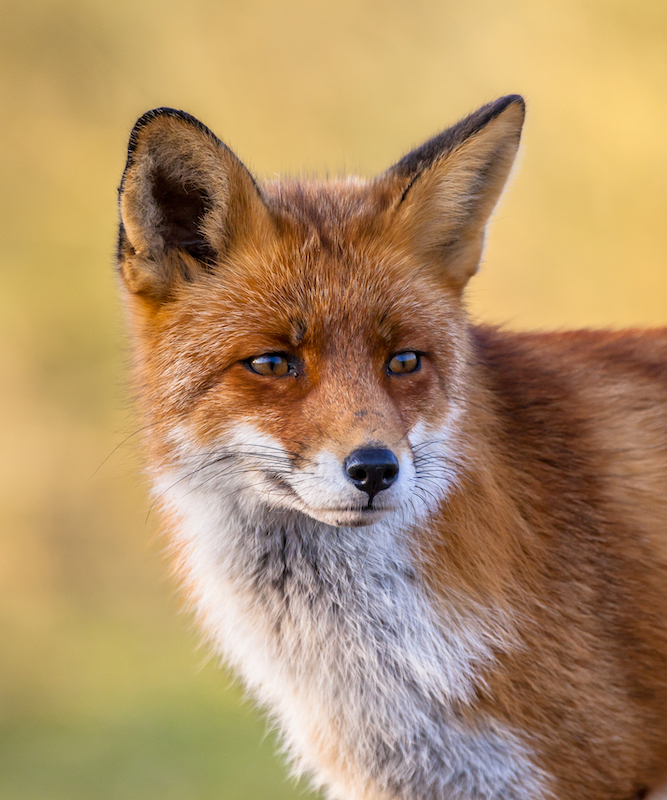
Ci bach means puppy, but it is also literally a small dog. In reality Penny (that’s her name) is going to be a very big ci indeed, because she’s a ci Labrador (Labrador). Specifically, she’s a red fox Labrador, which as you might guess is a breed named for its lliw (colour), coch (red) like a cadno (fox).
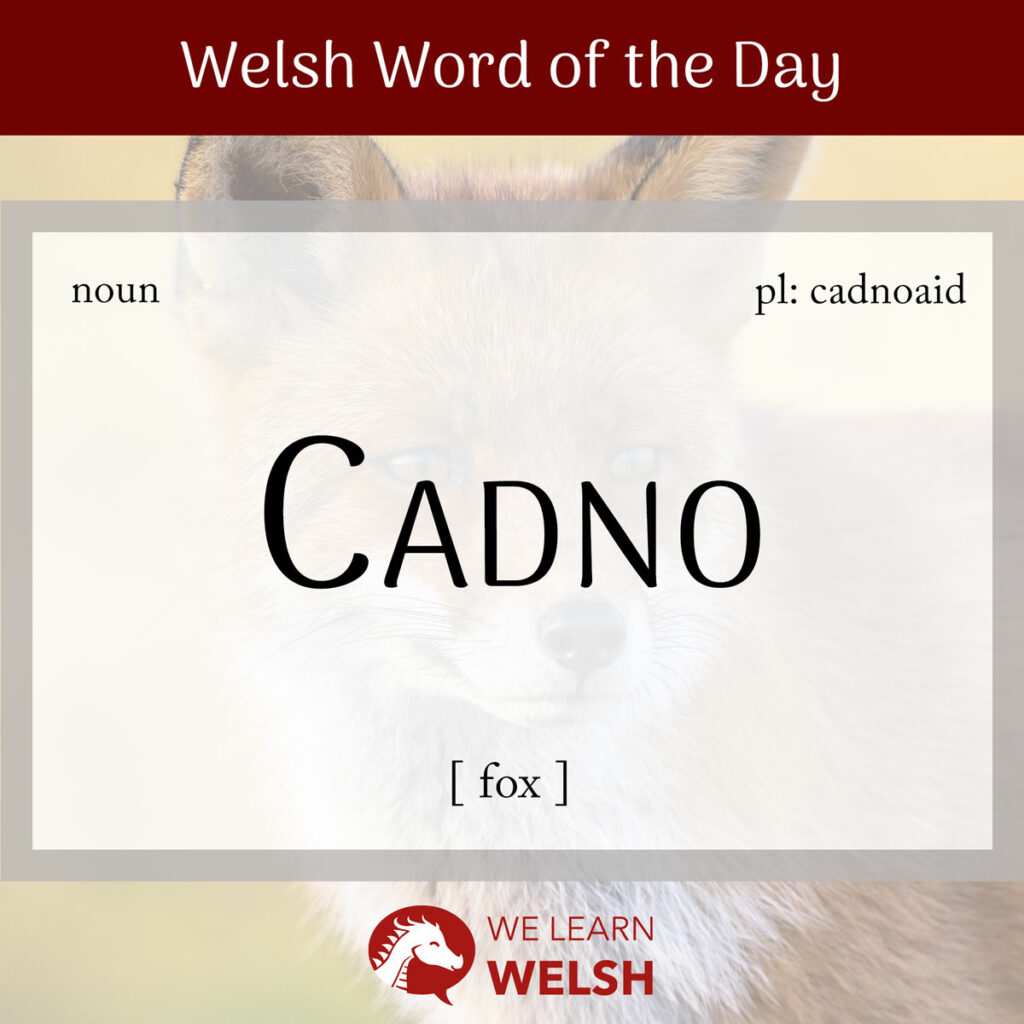
Cadno is one of the two most well-used Welsh words for fox, default in the South of the country. The plurals people use vary, but cadnoaid is probably the most common today. Sometimes people spell and pronounce it without the a, so cadnoid, but I think that makes it sound like the name of a robot (robot)!
cadno
a fox
cadnoaid
foxes
It is likely that cadno was a man’s name before it was ever a noun, coming from the literary word cad for battle and the suffix –no, which appears in other old-fashioned Welsh male names too. A good example is Tudno, the sant (saint) after whom the town of Llandudno was named.
Interestingly, the same thing happened in French with the name Renard becoming renard (fox). This is due to the popularity of folk stories about cadnoaid where the cadno becomes a regular, identified character known quasi-affectionately by one name. Records of the trickster Reynard the Fox are kept in the Bodleian Libraries at Oxford.
Cadno is a masculine noun, and it can mutate in all three ways:
Soft mutation
gadno
Nasal mutation
nghadno
Aspirate mutation
chadno
There is a feminine form, cadnawes / cadnöes (vixen). It mutates in the same ways, but a key difference is that because feminine nouns mutate after the definite article and masculine nouns don’t, the fox is y cadno if you are talking about a male fox and y gadnawes for a female fox.
Realistically most of the time you won’t know the gender of the fox under discussion, in which case cadno it is!
Or is it? The exception is if you are based in the North or prefer to learn a Northern dialect of Welsh, as I’m sure is the case for many of our readers. In this case the word you are most likely to hear and use is llwynog, which comes from the word llwyn (bush).
llwynog
a fox
In many ways llwynog is a lot simpler. It only takes one mutation:
Soft mutation
lwynog
Nasal mutation
N/A
Aspirate mutation
N/A
There is only one commonly used plural:
llwynogod
foxes
And there is also only one feminine form, which is llwynoges.
Simplicity aside, my favourite thing about llwynog as someone who personally uses cadno are the expressions tywydd llwynog (fox weather) and llwynog o ddiwrnod (a fox of a day), which refers to changeable tywydd (weather).
Don’t worry too much about whether to use cadno or llwynog. Just pick based on whether you are learning a more Southern or more Northern flavour of Welsh, or, in a pinch, based on what you can remember! The bottom line is that both are very common and people will recognise both wherever you are. It’s only worth being aware of the two so that you can understand them when they come up.
It’s less important to understand the other possible terms for a fox in Welsh, since they are much rarer to hear, but it is fun to be aware of them. Terms recorded include:
- madog = another one originating from a personal name
- madyn = a variant form of madog
- pryf coch = literally red pest or red insect
- canddo = a less common alternative to cadno
- Siôn Blewyn Coch = literally Red-Haired Siôn
- Siân Slei Bach = literally Sly Little Siân, for a vixen
There is no specific word for a fox cub or fox cubs. The term cenau for a cub or puppy is simply paired with cadno or llwynog; the plural of cenau is cenawon.
Rhuthrodd cadno ar draws y stryd ac o’r golwg.
A fox scurried across the street and out of sight.
What about a word for my Penny, a red fox Labrador? I just say Labrador coch. You might think she could be a ci cadno, but this means a fox-hound: a ci that is used to hunt cadnoaid rather than one that looks like one.
Unfortunately for cadnoaid, the hela (hunting) of them, for sbort (fun, sport) or for their blew (fur), has been common historically in the U.K., to the extent that in South Wales the children’s game hide-and-seek was traditionally named after the pastime – chwarae cŵn cadno (literally playing fox dogs).
Hela cadnoaid with cŵn is now technically banned in England, Wales, and Scotland, although various kinds of hela still exist and are legal. It is also legal to kill a cadno in defence of kept anifeiliaid (animals) which the cadno itself is attempting to hela, such as in particular ieir (chickens).
The problem of cadnoaid going after ieir is addressed in the library of Welsh idiom:
- ymhell o gartre y mae’r llwynog yn lladd = far from home the fox kills, equivalent to the English proverb a wise fox doesn’t rob his neighbour’s hen-roost
- rhoi allwedd cwt ffowls i’r cadno = to give the fox the keys to the hen-house, meaning to put trust / responsibility in the wrong hands
- the use of the simile mor gyfrwys â chadno (as sly as a fox), as well as hen gadno and hen lwynog (old fox) to refer to a sneaky person, likely stem from a historic distrust of the animal in farming communities
Y math lleiaf o gadno yw’r corgadno.
The smallest kind of fox is the fennec fox (literally dwarf-fox).
Whether cadnoaid are truly as cyfrwys, twyllodrus (sly, cheating), and dichellgar (crafty) as myth and proverb would have us believe I don’t know.
Evidence for their intelligence can be found in the success they have had in adapting to the urban environments of trefi (towns) and dinasoedd (cities). Although I know they can be trwblus (troublesome, naughty, disruptive), I always like spotting a cadno at night in the dinas – a reminder of the wild that still remains in the midst of built-up human habitation, just around the corner, just out of sight.