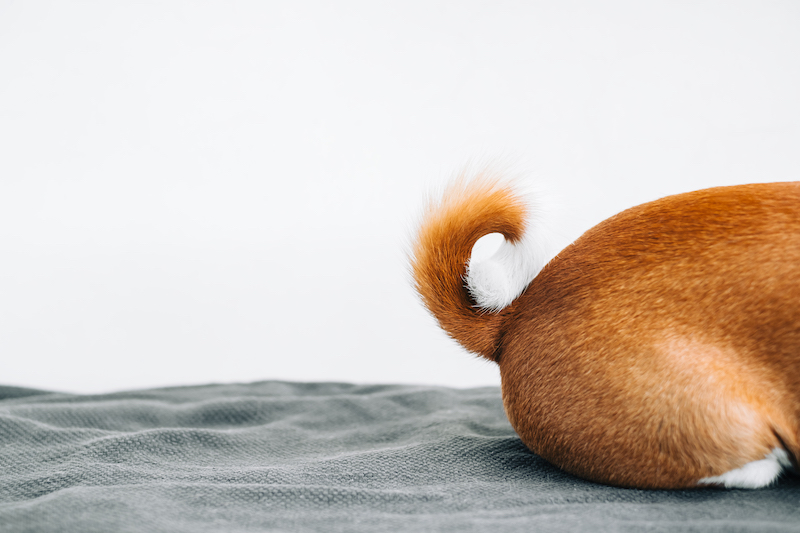
Have you ever heard the Welsh folk song Cyfri’r Geifr, also known as Oes Gafr Eto?One of the first words I picked up at the beginning of my Welsh learning journey was from this song – cynffon – which means tail or appendage. The plural is the very regular cynffonnau.
cynffon
tail / appendage
cynffonnau
tails / appendages
As you can see from the lyrics below, it appears three times, twice in its soft mutated form and once in its aspirate mutated form.
Oes gafr eto?
Oes heb ei godro?
Ar y creigiau geirwon
Mae’r hen afr yn crwydro.
Gafr wen, wen, wen.
Ie finwen, finwen, finwen.
Foel gynffonwen, foel gynffonwen,
Ystlys wen a chynffon
Wen, wen, wen.
Is there another goat?
That’s not been milked?
On the craggy rocks
The old goat is wandering.
A white, white, white goat,
Yes white lipped, white lipped, white lipped,
A bald white tail, a bald white tail
A white flank and tail,
White, white, white.
Soft mutation
gynffon
Nasal mutation
nghynffon
Aspirate mutation
chynffon
Cynffon is a feminine noun, which means it must soft mutate after the definite article y (the), becoming y gynffon (the tail). It does not affect the plural, however, which remains y cynffonnau (the tails).
Cynffon, as you might have surmised, is a compound word made up of:
- cyn, a form of ci (dog)
- ffon which means stick
Cyn shows up in other compound words such as cyndyn (stubborn), as well as many archaic Welsh words e.g. cynllyfan (dog lead) and cynllwst (kennel). In everyday language, however, you’re far more likely to hear tennyn (dog lead) and cwt ci (kennel, lit. dog hut).
While cynffon and its variant cwmffon are mostly heard in the north, the dominant term in the south tends to be cwt (plural: cytiau). Eagle-eyed readers might have already noticed that this is the same word used for hut in Welsh! Both meanings of cwt are pronounced the same way, as you can hear below.
cwt
tail / appendage / hut
cytiau
tails / appendages / huts
Other possible, albeit far less common synonyms include cloren, which mostly refers to the base of a horse’s tail or a peacock’s tail, and the literary llosgwrn.
Now let’s turn to the actual meaning of cynffon. The first, most literal meaning is the tail of an animal.
Mae’r ci yn ysgwyd ei gynffon.
The dog is wagging its tail.
However, just as in English, cynffon also has a number of figurative meanings used to describe things that resemble tails in appearance. Two of the most common examples you will encounter in daily conversation are cynffon comed (tail of a comet) and cynffon cot (coat tail).
It also appears quite frequently in the names of plants with a tail-like appearance:
- cynffon y ceiliog = Valerian (Valeriana officinalis)
- cynffon titw = dyer’s weed (Reseda luteola)
- cynffon ŵyn bach = hazel catkins
- cynffon y gath = Timothy grass (Phleum pratense)
- cynffon y cadno = meadow foxtail (Alopecurus pratensis)
Interestingly cynffon can also be used to describe a strong, unpleasant aftertaste experienced after the first sip or bite of something. In English, this could be rendered as tang.
You may also see it in the expression codi cynffon, which literally translates as “to lift the tail”. You can use it to describe someone or something that scoots off quickly, much in the same way a frightened rabbit might dash away from a loud noise or predator lying in wait.
Before wrapping up this post, let’s take a look a few idiomatic expressions that feature cynffon, courtesy of the ever-useful Geiriadur Prifysgol Cymru!
Â’i gynffon yn ei ben ôl
English meaning: dispirited like a dog beaten in a fight
Literal translation: with the tail between the hind-legs
Byw ar ei gynffon yn lle byw ar ei ewinedd
English meaning: to live by sneaking and sponging rather than by honest work
Literal translation: living by his tail instead of by his nails
Fel cynffon buwch
English meaning: like a cow’s tail
Literal translation: loose at one end / swaying like a cow’s tail / fickle
Gwneud drwg rhwng y diawl a’i gynffon
English meaning: to beat the devil as a mischief-maker
Literal translation: to make mischief between the devil and his tail