Wolves have a unique relationship with humans. On the one hand, they haunt the llên gwerin (folklore) of cultures throughout Europe, Asia and North America, the cunning villains of chwedlau (fables) like Hugan Fach Goch (Little Red Riding Hood) or the legend of the bleidd-ddyn (werewolf).
But on the other, in many diwylliannau (cultures), they’re seen as noble animals, capable of ffyddlondeb (faithfulness, loyalty) and deallusrwydd (intelligence, understanding) and worthy of parch (respect). And they’re also of course the ancestor of man’s ffrind gorau (best friend), the ci (dog).
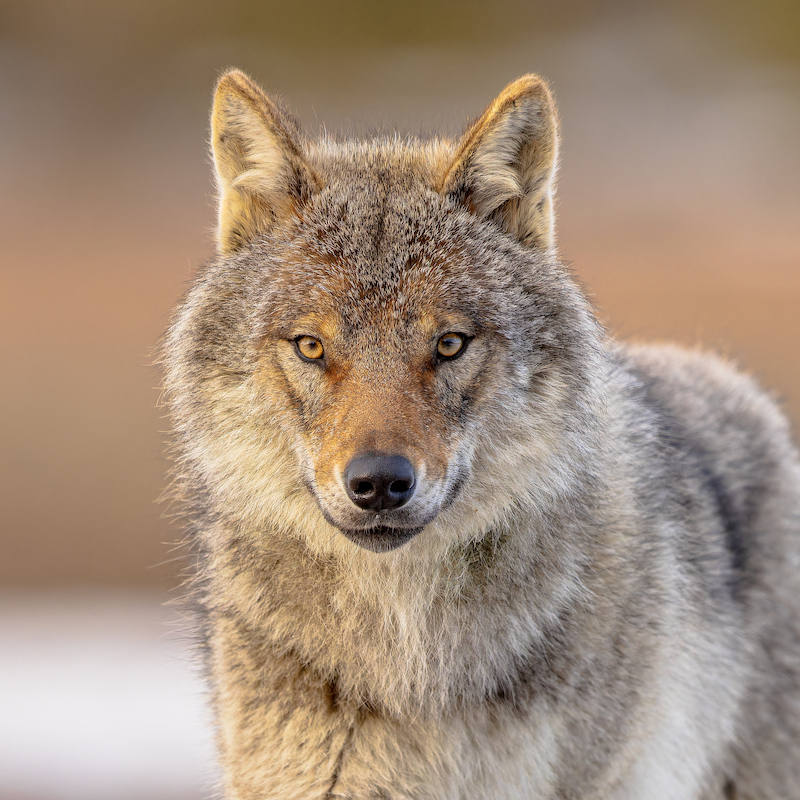
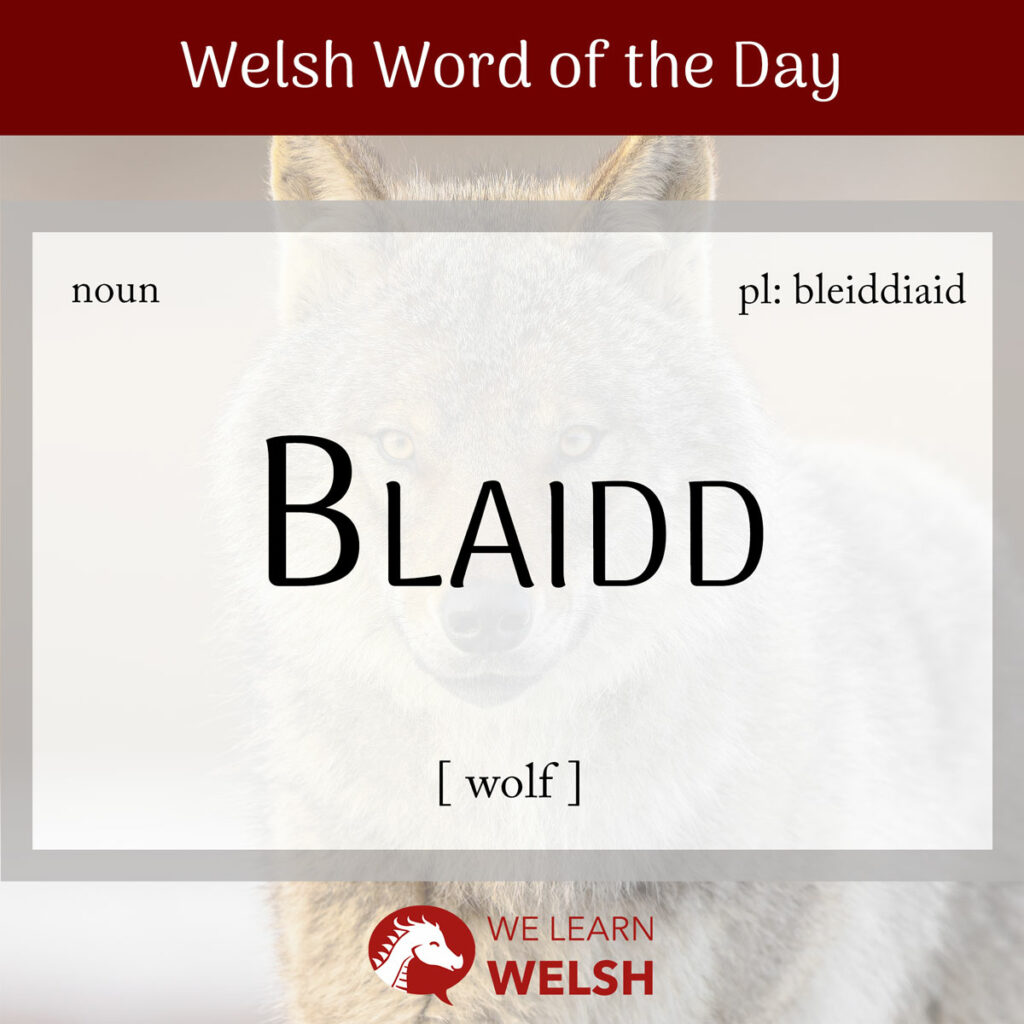
A wolf in Welsh is blaidd, a masculine noun which may be pluralised as bleiddiaid or bleiddiau. There is also a feminine form, bleiddast (she-wolf), combining the root word blaidd with the word ast (bitch as in female dog, but, like in English, it is also used as an offensive insult). Notice as well that the first vowel has changed in both the plural and feminine forms, as well as in the word for werewolf, although the latter is also sometimes written and said simply blaidd–ddyn.
blaidd
wolf
bleiddiaid
wolves
Blaidd comes from the proto-Celtic *bledyos, which meant wolf but also referred more generally to large, predatory, and monstrous creatures. For example, a related world bled in Old Irish meant morfil (sea monster, whale)! Perhaps the talk of sea monsters has something to do with the term blaidd dŵr (water wolf) sometimes used for a penhwyad (pike fish).
The Cornish and Breton words for wolf come from this same root, as well – they are bleydh and bleiz respectively.
It takes the soft and nasal mutations:
Soft mutation
flaidd
Nasal mutation
mlaidd
Aspirate mutation
N/A
Since it’s masculine, the wolf is y blaidd, without a mutation. However, the she-wolf is y fleiddast.
So, what is a blaidd? The online dictionary Gweiadur defines this iconic creadur (creature) as an anifail gwyllt ysglyfaethus o deulu’r ci sy’n byw ac yn hela mewn cnud… okay, so let’s break that down.
Anifail gwyllt means a wild animal. The phrase has a likely unintended double meaning here, as the word gwyllt in Welsh is often used to mean angry, crazy, or ferocious, like how you might say in English that someone has gone wild.
Ysglyfaethus means predatory, and indeed bleiddiad are known for eating other large anifeiliaid (animals), even targeting human ffermiau (farms) for da byw (livestock). Fairytales like Y Tri Mochyn Bach (The Three Little Pigs) reflect human anxiety about this phenomenon – especially in the cultures of Western Europe, where bleiddiaid are the only indigenous large ysglyfaethwr (predator) and therefore were the biggest perygl (danger / threat) historically.
O deulu’r ci means from the family of the dog. Here, teulu is family, and it’s soft mutated because it follows the preposition o.
You can read more about cŵn (dogs) here, but they’re not just from the same family as bleiddiaid – they are literally just a set of dof (domesticated, tame) sub-species of bleiddiaid. I wonder who was the first brave human to look at a blaidd and decide to try and bring it home with them!
Some cŵn, like hysgwn (huskies), are more closely related to bleiddiaid gwyllt (wild wolves) than others. Clearly the Welsh think the most bleiddaidd (wolfish) of cŵn is the German shepherd, since we call it a ci blaidd.
Y math mwyaf cyffredin o flaidd yw’r blaidd llwyd.
The most common kind of wolf is the grey wolf.
In the last part of Gweiadur’s definition, sy’n byw ac yn hela mewn cnud, you may recognise the words byw (to live) and maybe hela (to hunt).
But what this definition is telling us more specifically is that bleiddiad do so in a cnud / haid (pack). Haid is a more general term; cnud is quite specific to bleiddiad and cŵn.
Their highly cymdeithasol (social) behaviour and seeming displays of hoffter (affection) towards cnud members is something that has earnt bleiddiad respect and curiosity from humans. Cnudiau are also hierarchaidd (hierarchical), with an ‘alpha’ pair – the alpha is archaically in Welsh called the cynflaidd – being shown deference by other cnud members and producing most of the cenawon / cybiau (cubs).
A cenau blaidd / cwb blaidd (wolf cub) is sometimes called a bleiddyn / bleiddian, but this is becoming less common.
Many of the proverbs and idioms that relate to bleiddiaid in Welsh are the same as those that we have in English, like blaidd mewn croen dafad (a wolf in sheep’s clothing, literally a wolf in sheep’s skin), gweiddi blaidd (to cry wolf), and taflu rhywun i’r bleiddiaid (to throw someone to the wolves).
Let sleeping dogs lie is an interesting one since in English it used to be also common to say something along the lines of wake not the sleeping wolf: this variant remains in modern Welsh where both na ddeffro’r ci sy’n cysgu (don’t wake the dog that’s sleeping) and na ddeffro’r blaidd o’i gwsg (don’t wake the wolf from his sleep) is heard.
Wyt ti’n credu eu bod bleiddiaid go iawn yn udo i’r lleuad?
Do you think that wolves really do howl at the moon?
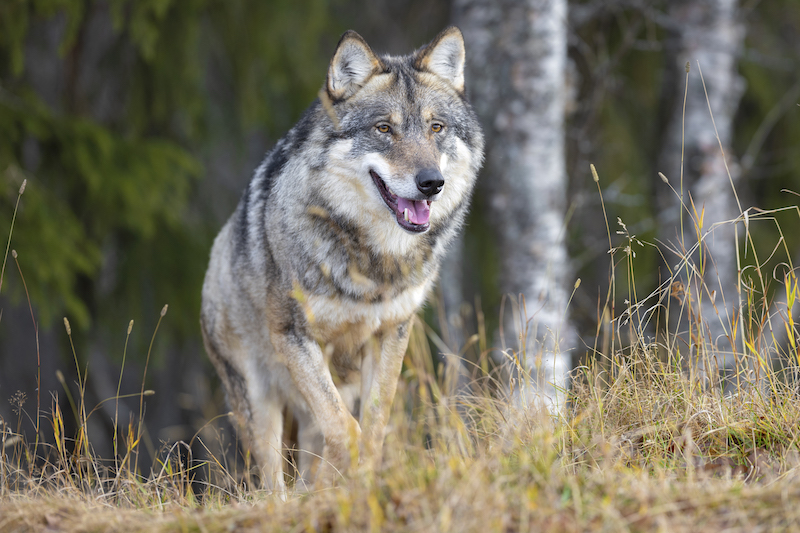
Some English uses of the word wolf don’t work in Welsh. You wouldn’t hear blaidd unig for a lone wolf as in a loner, for example, though aderyn unig (a lone bird) is sometimes heard. We also don’t have the term wolf-whistle; in this context you could just say chwibanu (to whistle).
And, reversing things, there are a couple of idiomatic uses of blaidd that are more unique to Welsh.
Yn oes yr arth a’r blaidd (the age of the bear and the wolf) is one literary way of saying a long, long time ago old-fashioned.
We also have our own proverb about bleiddiaid, which is cyfaill blaidd bugail diog (a wolf’s friend is a lazy shepherd). I actually always assumed this warning against ignoring one’s responsibilities was something said in English too, but apparently not!
It’s an interesting phrase because it reveals something about Welsh grammar. Look closely and you’ll notice that there is no verb here – just the words cyfaill (a friend), blaidd, bugail (a shepherd), and diog (lazy). The yw / ydy (is) would go right in the middle sentence if it was there, but it’s not.
This is called copula dropping, and this structure appears a lot in archaic and literary Welsh, mostly seen today in proverbs. Another one is hawdd cynnau tân ar hen aelwyd (it’s easy to light a fire on an old hearth, referring to the supposed ease of restarting an old relationship!) Or one that’s very commonly heard is gwir pob gair (every word is true).
Does dim bleiddiaid yn byw yng Nghymru heddiw.
There are no wolves living in Wales today.
So what about the fearsome bleidd-ddyn? What’s his place in Welsh history?
There are some tales in Wales’ extensive mythological literature where pobl (people) turn into bleiddiad (wolves), often then being turned back into humans. But these don’t really follow the template of what we expect from a bleidd-ddyn story, with monthly uncontrollable ‘turnings’ governed by the lleuad / lloer (moon).
The historical record suggests that a true folk belief in bleidd-ddynion (werewolves) never took hold in England, Wales and Scotland the way it did in continental Europe. There are few references in any literature from the British isles to bleidd-ddynion. Those we do see don’t really turn up until the 1800s and 1900s, and these storïau (stories) are normally set in France, suggesting they travelled here from there.
Some later chroniclers do record bleidd–ddynion as a feature of indigenous Welsh mythology, but these references are almost certainly apocryphal, and may refer to misinterpretations of legends about cŵn duon (black dogs), one of the most important recurring motifs in British folklore, like Wales’ cŵn Annwn (Otherworld dogs).
In general, misinformation is common when it comes to the histories of the Celtic peoples and their cultures. But don’t be fooled by stories of bleidd-ddynion Cymreig (Welsh werewolves). There’s a disappointingly practical reason that Wales (and England!) lack in stories of bleidd–ddynion – it’s because we lack in real bleiddiaid, too.
P’un sy’n codi fwy o ofn arnat ti – bleidd-ddyn neu fampir?
What’s scarier – a werewolf or a vampire?
Bleiddiaid are indigenous to the British isles and could be as mawr (large) as continental bleiddiaid, unlike other species which tend to be llai (smaller) on ynysoedd (islands). They were particularly numerous in the coedwigoedd (forests) on the border of Cymru (Wales) and Lloegr (England).
Since bleiddiad were a key fear for medieval British people, and could endanger da byw, after the Norman conquest, one common criminal punishment was to be required to kill a certain number of bleiddiad as penance.
The hela (hunting) of bleiddiad escalated over the next two canrifoedd (centuries), until the brenin (king) Edward I ordered the difodiad (extermination) of all bleiddiaid in Lloegr.
This occurred during the time that Cymru was in the process of being annexed to Lloegr – one year before the death of Llywelyn ap Gruffudd, often called the ‘last prince of Wales’ or, in Welsh, Llywelyn ein llyw olaf (Llywelyn our last leader). As such, and because many of the bleiddiaid lived on the border between the two nations, Cymru also lost the vast majority of its bleiddiaid under Edward I.
Over the next few hundred years they became entirely extinct throughout Cymru, Lloegr, and yr Alban (Scotland). The blaidd olaf yng Nghymru (last wolf in Wales) was probably killed in the 1500s.
Since the 1990s reintroduction has been considered, especially in yr Alban, and one sanctuary where bleiddiad are kept semi-gwyllt (wild) exists in Shropshire, on the Cymru–Lloegr border that these anifeiliaid (animals) would historically have roamed.
And in a way, bleiddiaid have return to Cymru on a cultural level, too. The bleidd–ddyn may not appear in our traditional mythology, but the supposedly Yorkshire-based scenes of the classic film An American Werewolf in London were actually filmed in the Brecon Beacons!