Do you remember, remember the 5th of November? I don’t know about you, but that old rhyme is permanently ingrained in my mind. I’ve always loved the cyffro (excitement) of watching the tân gwyllt (fireworks), smelling the cŵn poeth (hot dogs), hearing the plant (children) shouting as they whirl sbarclyr (sparklers) through the air, and seeing dazzling lliwiau (colours) shoot across the starry sky.
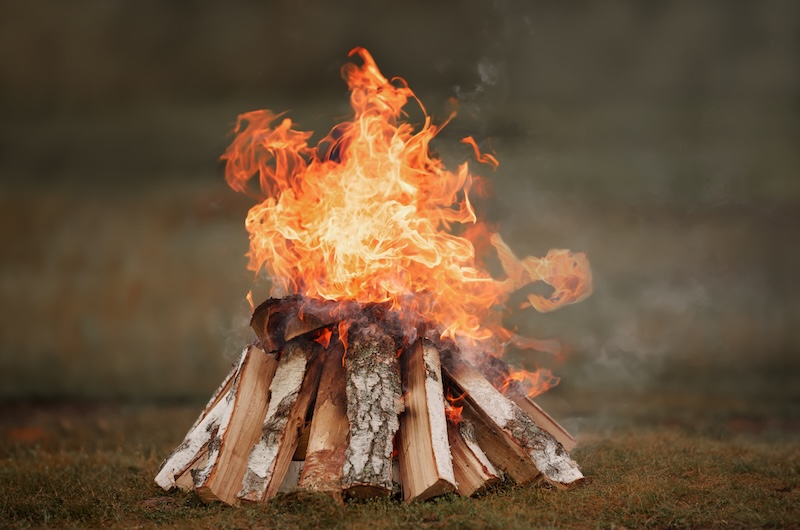
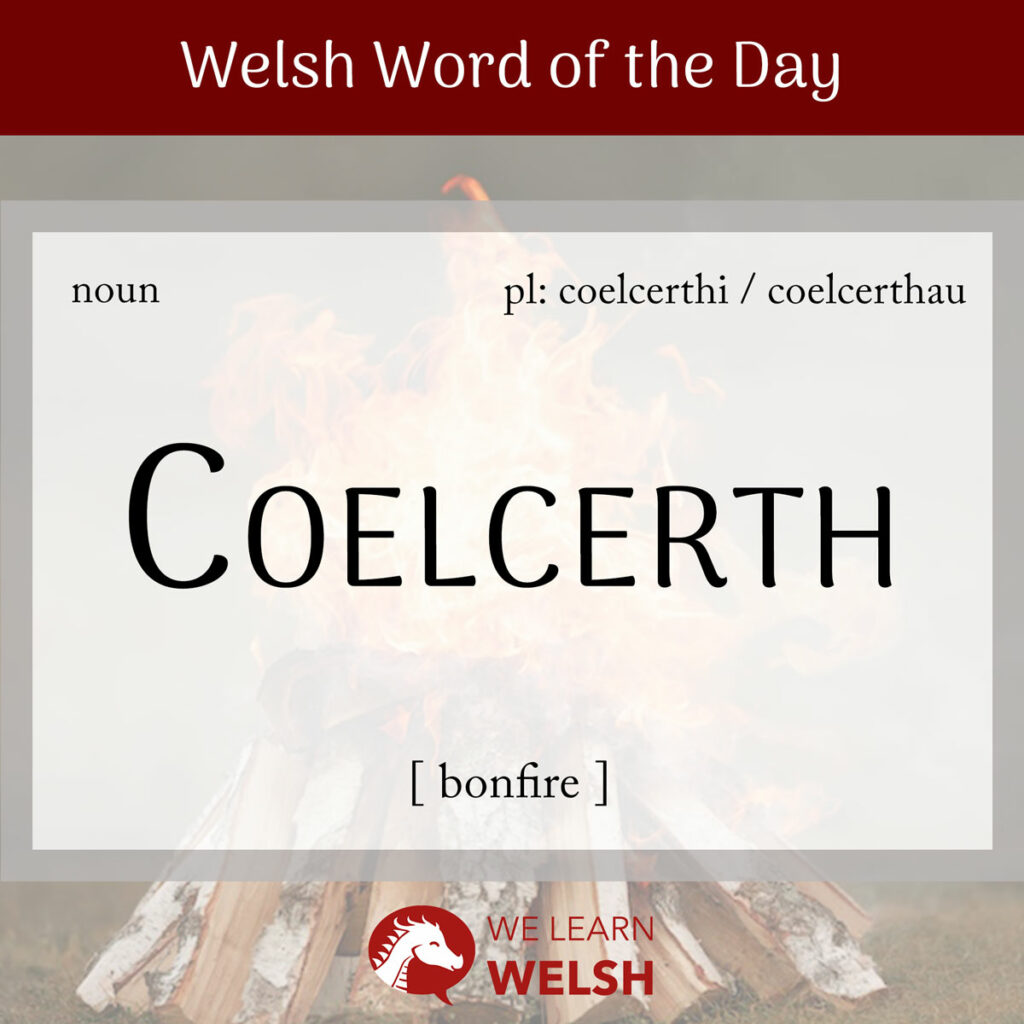
Today’s word of the day is coelcerth (bonfire), a large outdoor fire, usually lit for celebration, ceremony, or signalling. Coelcerth (plural: coelcerthi / coelcerthau) is a native Welsh compound formed of two inherited Celtic elements, and it appears in Welsh texts as early as the 13th canrif (century). Over time, the word has developed several variant spellings, including goelkerth in the Book of Aneirin, and colceth and colcath in more modern southern dialects.
coelcerth
bonfire
coelcerthau / coelcerthi
bonfires
Let’s break down the word:
Coel comes from the Proto‑Brittonic kayl and Proto‑Celtic kaylo or kailo meaning belief, trust, or omen. It connects to reliability or certainty and shares an Indo‑European root with the English words whole, hale, and health.
Certh also originates from the Proto‑Brittonic and Proto‑Celtic word kerto, meaning sure, true, or correct.
GPC lists coelcerth as both a masculine and feminine noun. Occasionally this can happen with older nouns, whose spelling, pronunciation, and even grammatical gender have shifted throughout the years. Due to the fact that coelcerth is generally recognised today as a feminine noun, it takes a soft mutation after the definite article y and becomes y goelcerth.
Soft mutation
goelcerth
- ei goelcerth fe/e – his bonfire
- dy goelcerth – your bonfire
Nasal mutation
nghoelcerth
- fy nghoelcerth – my bonfire
Aspirate mutation
choelcerth
- ei choelcerth hi – her bonfire
Historically, coelcerthi were large ritual fires lit on Nos Galan Gaeaf (Halloween) and Nos Galan Mai (May Eve), echoing similar Celtic traditions such as Bealtaine (“bright fire”) in Iwerddon (Ireland), which marks the beginning of Haf (summer), halfway between the spring equinox and the summer solstice.
These fires were not only practical but also gave cymunedau (communities) a sense of hunaniaeth (identity). Tân (fire) became a powerful symbol of treftadaeth (heritage), acting as both a purifier and a protector of the community, especially on nights like Calan Gaeaf, when people would fear evil.
Noson Tân Gwyllt (Bonfire Night) became a yearly traddodiad (tradition) on the 5th of November 1605 following Guy Fawkes’ attempt to blow up the Houses of Parliament. Despite the destructive intentions behind the Gunpowder Plot, Noson Tân Gwyllt remains deeply rooted in British culture today.
Casglwch bren ar gyfer y goelcerth.
Collect wood for the bonfire.
Are you planning to adeiladu coelcerth (build a bonfire) over the next few weeks to mark old Guy Fawkes Night? Or will you be heading out to a local display for cwn poeth (hot dogs) and siocled poeth (hot chocolate)? Whatever your plans, take a moment to reflect on the long hanes (history) and deep traddodiadau (traditions) behind this fiery celebration.