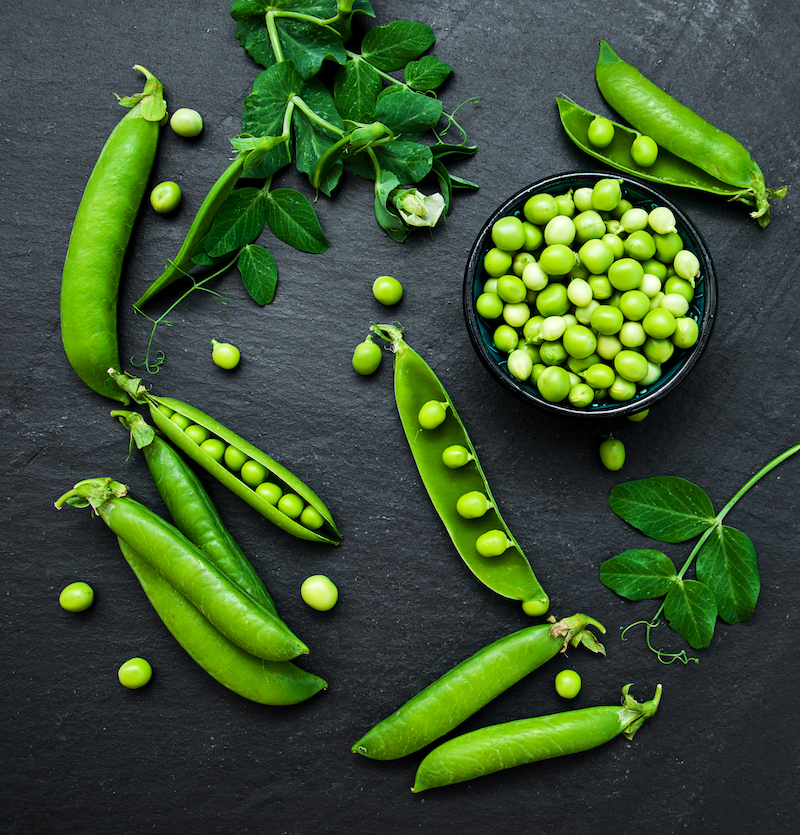
Pys (peas) are the definition of small but mighty when it comes to eating, full of haearn (iron), fitaminau (vitamins), and even protein (protein). No wonder they’re so popular in the UK – from pys stwnsh (mushy peas) with ‘sgod a sglod (fish and chips) to the classic cawl pys (pea soup), they’re a staple in our cuisine and a worthy Welsh word of the day.
As with many Welsh words for planhigion (plants) and bwyd (food), the default form of the word is the plural, pys. Just one pea is a pysen and this is a feminine noun.
This word can be a bit tricky to know how to pronounce because of the vowel, y. Usually y in Welsh is pronounced like the English u in bun, and in the final syllable of the word as the English i in bin. Here, it is pronounced like the ea in bean.
pys
peas
pysen
a pea
Pys comes from the proto-Brittonic *pis and ultimately the Latin pisum. It mutates like this:
Soft mutation
bys
Nasal mutation
mhys
Aspirate mutation
phys
Watch out – as you can see, when soft mutated, pys is similar to bys (fingers), which are not something that you want to start trying to nibble on!
In the garden, pys are planhigion dringo (climbing plants). Culinarily, they are llysiau (vegetables), and botanically, they’re actually ffrwythau. They grow in codennau / codau (pods), or plisg in the South of Wales. This word codennau / codlysiau is the source of the name codlysiau for legumes. The pysen itself is the haden (seed) of the planhigyn (plant).
As codlysiau they are in good company with other delicious and nutritious bwydydd, like:
- ffa coch / ffa Ffrengig = kidney beans
- ffa tew = broad beans
- ffa soia = soya beans
- ffa lygatddu / pys llywdion = black-eyed peas
- pys clec = snap peas
- pysgnau = peanuts
- corbys / pys melyn = lentils
- ffacbys = chickpeas
… and many more. Of all these terms ffacbys for chickpeas is my favourite because it looks pretty much like the words ffa (beans) and pys have been smashed together! In fact its resemblance to ffa is coincidental – the first syllable comes from the English word vetch.
Rhaid i ti orffen dy bys cyn i ti gael pwdin.
You have to finish your peas before you can have pudding.
Ordinary green peas can be called just pys, pys gardd (garden peas) or pys gleision (blue peas). This latter term can be explained by the fact that glas (blue) in Welsh was historically used to refer to gwyrdd (green) and llwyd (grey), and this meaning survives in many set terms like pys gleision, especially those that refer to natur (nature).
Split peas are pys hollt, whereas frozen peas are pys rhewedig or pys wedi’u rhewi, and canned peas are pys tun.
The blodau (flowers) that called sweet peas are indeed the same thing in Welsh – pys pêr, with the added bonus of alliteration – but these are not bwytadwy (edible)!
So what do you do with pys? You can tyfu (grow) them, berwi (boil) them, and of course bwyta (them). One of the most popular ways to do so in the UK at least is as pys stwnsh, also called pys potsh, pys slwtsh, and pys mwtrin.
Another great thing to do with a pysen is to stick it into an idiom. Expressions like not in a month of Sundays or not until pigs fly are rendered in Welsh, charmingly, dim cyn dydd Sul y pys (not before pea Sunday).