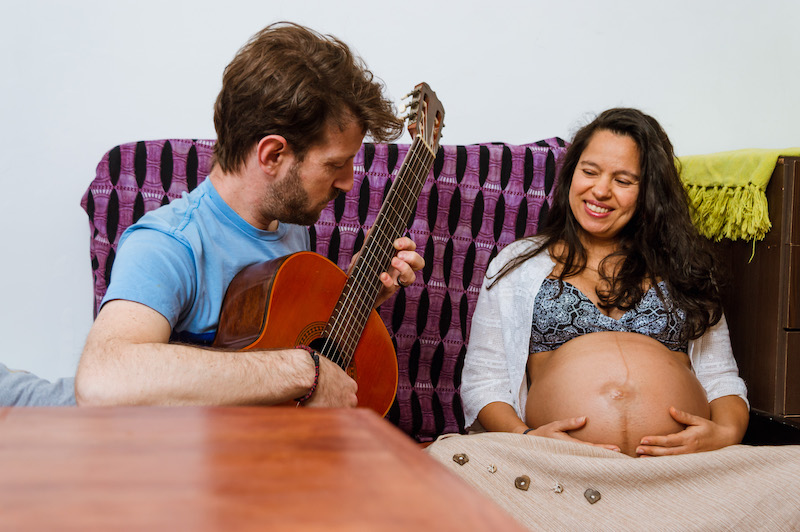
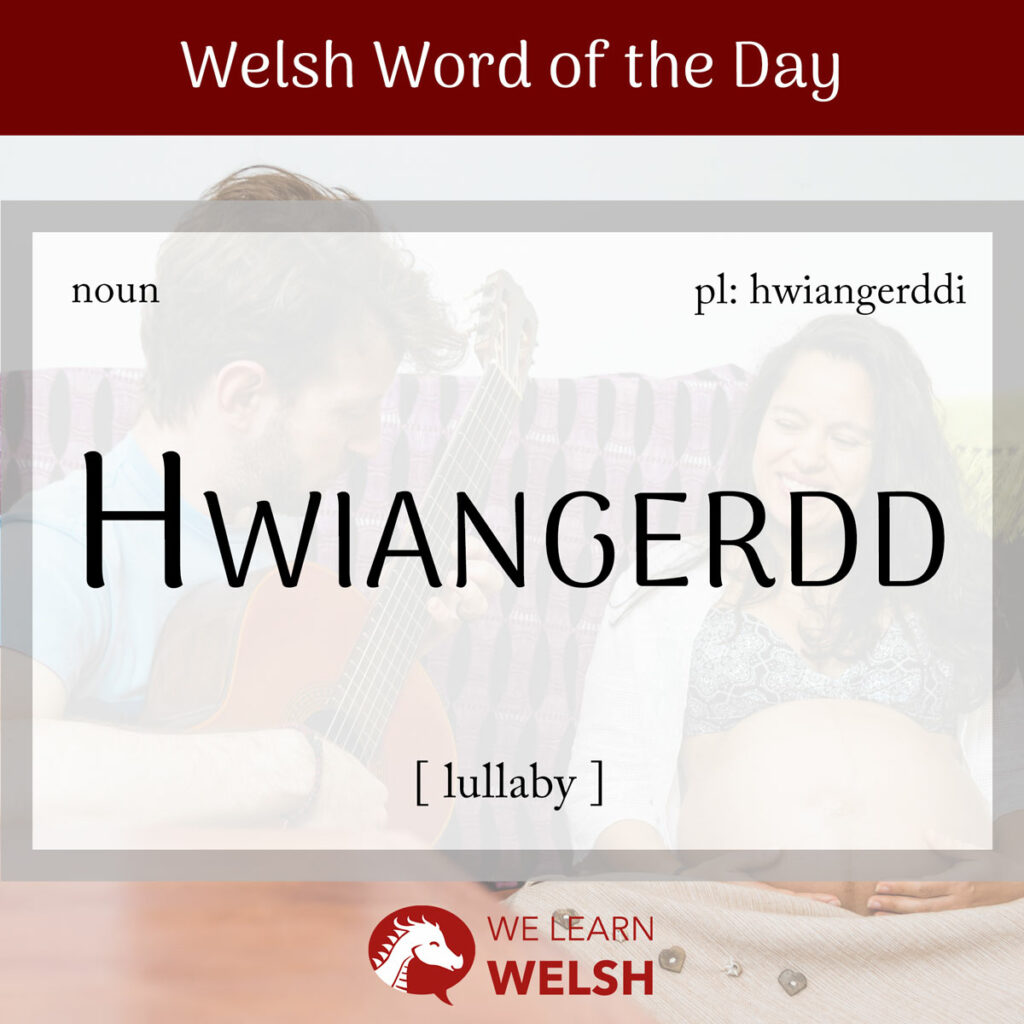
I’ve nattered on here plenty of times about how Cymru (Wales) is gwlad y gân (the land of song), but only because it’s true! Today, I thought we’d discuss a very specific kind of cân (song), that being a child’s hwiangerdd (lullaby).
Hwiangerdd is a feminine noun with the plural form hwiangerddi (lullabies).
hwiangerdd
lullaby
hwiangerddi
lullabies
The etymology of this word is very intuitive. You may even recognise the second half of it – gerdd is a soft mutation of cerdd, which means poem or sometimes song.
The first part is much less easy to instantly identify, as it’s not a word most people use that often. Hwian is an onomatopoeic verb that means, quite literally, to sing a lullaby! It also appears in the form canu hw, meaning the same thing.
Hwian is not the only word of its kind. There’s also lwian, lwlian, and lwlio, also all onomatopoeic – you can see how they sound like the English word lull, which probably also comes directly from the sounds made by people calming plant (children). They all refer to singing a lullaby or hushing a baban (baby) to mynd i gysgu (go to sleep).
Another example is suo, which leads to hwiangerdd having the synonyms cân suo and suo-gân. The word evolved from a verb into a noun and then right back into a verb again, as some people say suoganu to mean to sing a lullaby; a longer-winded alternative to hwian and its many synonyms.
If you are talking about hushing more generally, you can use the word tawelu (to quieten). And someone commanding someone else to Hush! would most likely say Isht! or similar.
Mi gana i hwiangerdd iddi, ac mi fydd hi’n tawelu ar unwaith.
I’ll sing her a lullaby, and she’ll quieten down straight away.
Though hwiangerdd comes from the sound of lulling a baby, it doesn’t exclusively refer to this today. People also use the word to mean nursery rhyme more generally, alongside more literal synonyms like odl blant, cerdd blant, or rhigwm plant – all these just means children’s poem / children’s rhyme. The difference in mutation comes from the fact that odl and cerdd are feminine nouns and rhigwm is a masculine noun.
There are loads of fun and amusing rhigymau plant (nursery rhymes) in Welsh, and they’re also a useful way of learning more vocabulary if you’re just starting out. Setting something to odl (rhyme) and cerddoriaeth (music) makes it way more memorable!
One good tactic is to watch Cyw (Chick), the children’s channel on S4C – you’ll come across many this way.
But the hwiangerdd I’ll leave you with is a very simple, traditional example which does exactly what a hwiangerdd is supposed to do and no more: makes you feel sleepy. It’s called Heno Heno (Tonight Tonight), and listening to it always makes me feel like a little child again!
Its lyrics are very simple, just repeating words to do with cysgu (sleeping), like the titular heno, or those that have a gentle, hushing sound. Each line ends with the canwr (singer) addressing the listener(s) as hen blant bach (dear little children). You can listen to Heno Heno here.