One of the trickiest things you have to keep watching out for as a language learner is false friends – words that look the same as a word in your native language or another language you speak, but mean something completely different.
One example of this phenomenon between Welsh and English is brain, which in Welsh means crows. The English word brain is ymennydd in Welsh.
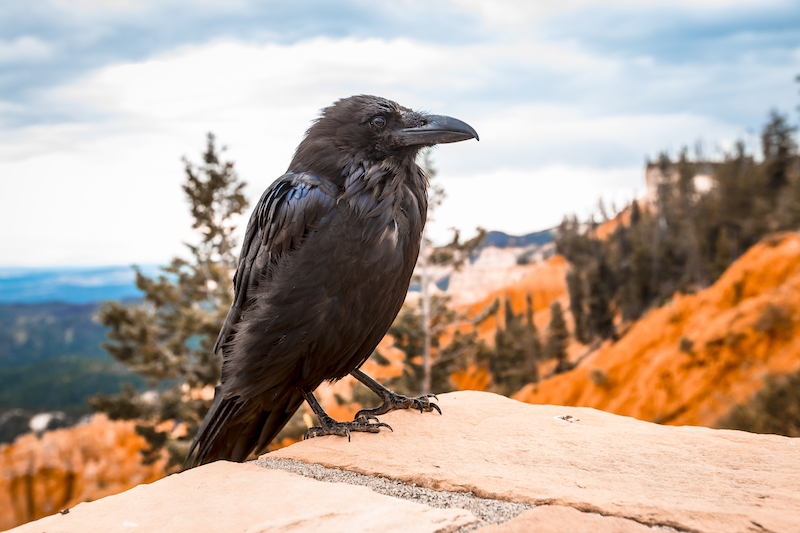
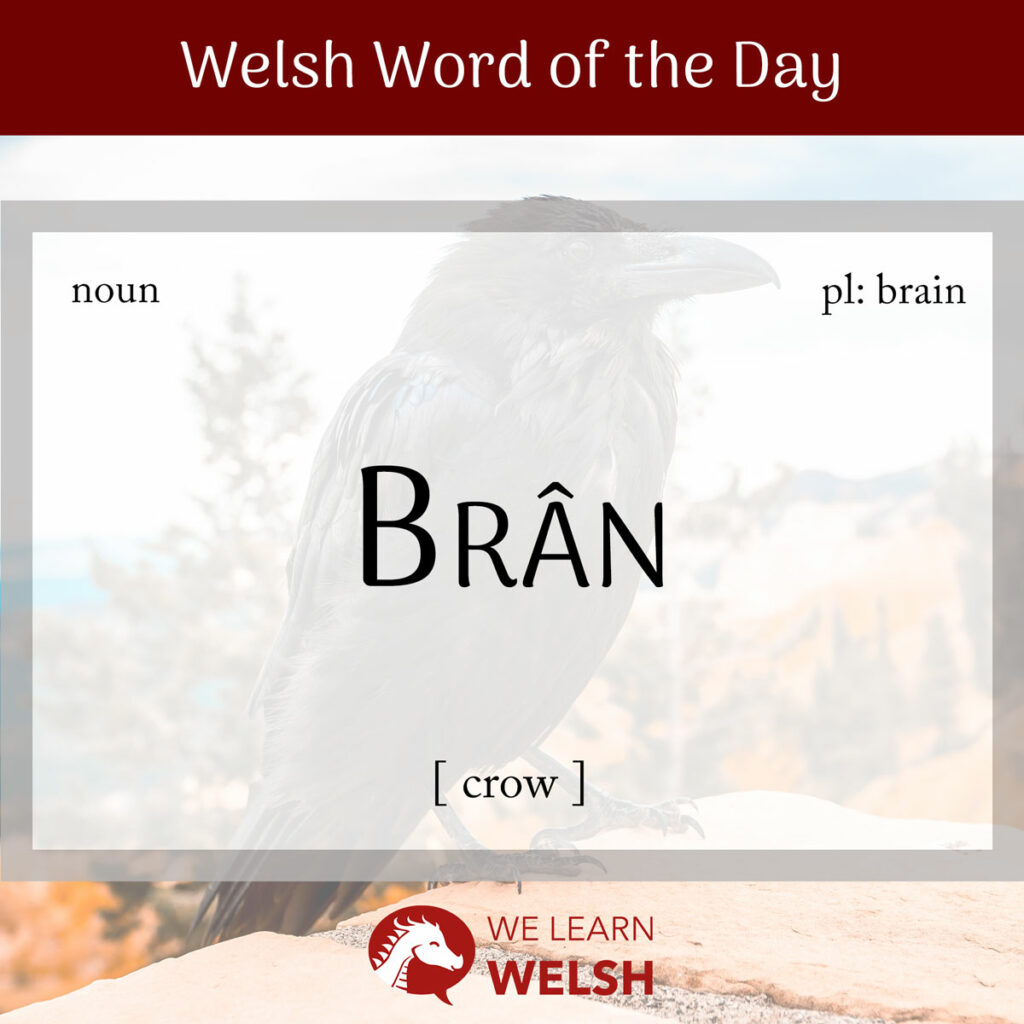
The singular version of brain is brân (crow), and that’s today’s word of the day. These adar (birds) play an interesting role in the folklore of Wales and the other Celtic cultures – read on to find out more, and learn some vocabulary along the way!
brân
crow
brain
crows
Notice that in the pronunciation clip above, brain is pronounced to rhyme more like the English word brine than brain. So ‘reading it aloud’ in your mind whenever you come across the word is one way to avoid mixing it up with the English word.
Brân is a feminine noun which comes from the proto-Celtic *branos meaning a crow or a raven. It is subject to two kinds of mutation:
Soft mutation
frân
Nasal mutation
mrân
Aspirate mutation
N/A
Now, something I learnt when researching this article is that a brân isn’t actually a specific kind of bird! In the genus, Corvus, there is a huge range of different kinds of adar; in general the smaller ones are called crows and the larger ones are called ravens, but the word crow doesn’t refer to just one species.
This works quite well if you’re speaking in Welsh, since in fact the word brân can be used to refer to any aderyn (bird) in the Corvus genus. No more trying to figure out the rhywogaeth (species) based on exactly how big that aderyn du (black bird) you’ve spotted is before speaking – just call it a brân!
The kinds of brân that are seen in the UK do technically have their own names.
- brân dyddyn = carrion crow
- brân lwyd = hooded crow
- ydfran / brân bigwen = rook
- brân goesgoch / brân Gernyw = chough
- cigfran = raven
- jacdo / jac-y-do = jackdaw
And if you can tear yourself away from learning about brain for a few minutes, there is a fun Welsh children’s song about jacdos.
Don’t worry too much about these very specific terms through. As a rule, these names will always be used interchangeably with the simple brân itself in colloquial Welsh speech. And sometimes brân is used in Welsh to talk about adar in general – historically in South-East Wales, even seagulls were called brain gwynion (white crows)!
Ai brân neu gigfran ydy honna?
Is that a crow or a raven?
A flock of crows in Welsh is called a haid o frain. As you can see, here the preposition o has caused a soft mutation to brain, turning it to frain.
Cultural depictions of brain vary worldwide, but in the Celtic cultures, they have historically been associated with marwolaeth (death). In fact the children’s nursery rhyme where the speaker counts pïod (magpies), which are closely related to the brân family, is likely rooted in old indigenous British traditions and superstitions about the power of brain and pïod and their connection to goruwchnaturiol (supernatural) forces.
One incredibly important figure in the Mabinogi – a medieval collection of Welsh stories based on the nation’s folklore – is Bendigeidfran (Brân the Blessed, literally Blessed Crow), a giant and king of Prydain (Britain). His story is a tragic one. After he agrees to let his sister Branwen marry the brenin (king) of Ireland, she is mistreated by him, and Brân must go to save her, leading to a huge rhyfel (war) and the death of hundreds of people.
At the end of the story, Branwen herself dies of grief, and only seven of the Welsh byddin (army) survive. In his dying moments Brân asks the survivors to take his pen (head) back to Prydain and bury it in a specific place in order to prevent ymosodiad (attack / invasion) from abroad. That place later became the building spot of Tŵr Llundain (the Tower of London), and some historians have suggested that Brân’s story might be connected to the tradition of keeping cigfrain (ravens) at the Tŵr.
Brân is still used as a boy’s name in Wales today, and Branwen – which means white crow – as a girl’s name. It also appears in place names.
Mae’n tua phum millter o Ferthyr, fel yr hed y frân.
It’s about ten miles from Merthyr, as the crow flies.
Given the recurrence of brain as a motif in Brittonic Celtic folklore, it’s unsurprising that these birds show up in proverbs. One that’s quite well-known is gwyn y gwêl y frân ei chyw (the crow sees its chick as white), which means that parents don’t recognise their children’s faults. Another one is mae bran i frân yn rhywle (there’s a crow for a crow somewhere), meaning that anyone no matter how odd can find the right partner for them.
There are also shorter idioms which recur in everyday speech. Bad handwriting is often insulted as baglau brain (crow’s legs). Especially in the South, someone who is ym mhig y frân (in the crow’s beak) is in very bad or dangerous circumstances, and a scarecrow is a bwgan brain, like in English. My favourite is bugeilio’r brain – this means to shepherd crows and it’s an equivalent of the English idiom to herd cats.
Despite these slightly insulting expressions, brain in real life are actually surprisingly smart. They score very high on tests of deallusrwydd (intelligence), and some gwyddonwyr (scientists) say that their relative brain size is more similar to that of epaod (apes) than of other adar. So maybe there is a link between the brain and brain after all!